
In today’s fast-changing financial landscape, CPA firms are under constant pressure to deliver high-quality services while managing costs, meeting deadlines, and handling increasing client demands. With talent shortages and rising operational expenses in the United States, many firms are turning to smarter, more scalable solutions. One such solution that has gained significant popularity is offshore accounting.
Offshore accounting services for CPA firms provide a strategic way to outsource routine and complex financial tasks to skilled professionals located in other countries. This approach not only helps firms reduce costs but also improves efficiency and allows them to focus on core advisory services. In this guide, we will explore what offshore accounting services are, how they work, their key benefits, and why they are becoming essential for modern CPA firms.
What Are Offshore Accounting Services for CPA Firms
Offshore accounting services refer to outsourced bookkeeping and accounting services tasks to professionals based in another country. These professionals work remotely but function as an extension of the CPA firm’s internal team.
For CPA firms, offshore accounting is not just about cost savings, it is about building a flexible and scalable workforce. Offshore teams handle time-consuming tasks such as bookkeeping, payroll processing, tax preparation support, and financial reporting. Many firms also rely on offshore bookkeeping services for CPA firms to manage daily financial records efficiently and accurately.
In simple terms, offshore accounting allows CPA firms to delegate routine work while maintaining control and quality, thereby improving productivity and reducing turnaround times.
Key Services Offered in Offshore Accounting for CPA Firms
Offshore accounting services cover a wide range of financial tasks that are essential for day-to-day operations. These services are often part of broader accounting outsourcing services for CPA firms USA, helping firms streamline operations and improve efficiency.
Bookkeeping and Data Entry
Offshore teams handle daily transaction recording to ensure all financial data is accurate and up to date. They track income and expenses and maintain general ledgers systematically. This helps CPA firms keep organized records without errors. As a result, businesses get a clear and reliable financial overview.
Accounts Payable and Receivable
Offshore professionals manage both outgoing payments and incoming invoices efficiently through accounts payable services. They ensure timely payments to vendors and proper follow-ups for receivables. This improves cash flow management and reduces delays. Consistent tracking also minimizes the risk of missed or duplicate payments.
Payroll Processing
Payroll tasks are managed by offshore teams with accuracy and compliance. This includes salary calculations, tax deductions, and employee payments. They ensure payroll is processed on time without errors. It also helps firms stay compliant with regulations and avoid penalties.
Tax Preparation Support
Offshore teams assist CPA firms by organizing financial data and preparing necessary documents. They ensure everything is ready before the final tax filing. This reduces workload during busy tax seasons. It also improves accuracy and speeds up the overall tax process.
Financial Reporting and Analysis
Offshore teams prepare essential financial reports like profit and loss statements, balance sheets, and cash flow reports. These reports provide insights into business performance. CPA firms can use this data to evaluate growth and financial health. It helps in making informed and strategic decisions.
Benefits of Offshore Accounting Services for CPA Firms
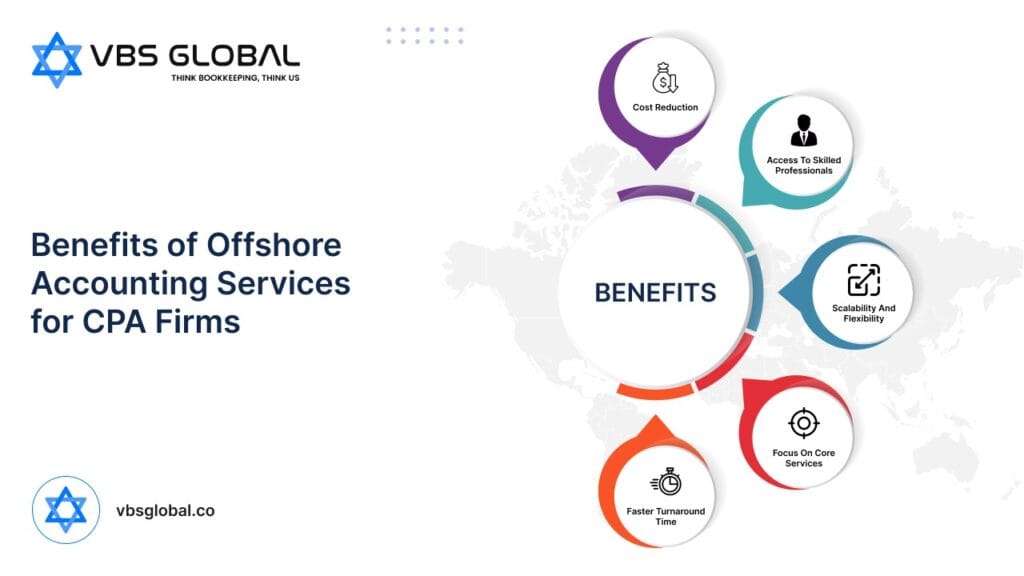
Cost Reduction
One of the biggest advantages of offshore accounting is the ability to reduce overall business costs. Instead of hiring a full in-house team, CPA firms can work with skilled professionals at a much lower cost. This helps save money on salaries, office space, and employee training. Understanding the offshore accounting services cost for CPA firms also helps businesses plan budgets more effectively. Overall, firms can manage finances efficiently while keeping expenses under control.
Access to Skilled Professionals
Offshore accounting gives CPA firms access to a wide pool of experienced professionals from around the world. These experts are already trained in accounting software, tax rules, and financial processes. This means firms don’t have to spend extra time or money on training new staff. The quality of work remains high and consistent. It also allows firms to handle complex tasks with confidence.
Scalability and Flexibility
One of the key benefits is the flexibility to scale operations based on workload. CPA firms can easily increase or reduce resources depending on their needs. During busy seasons like tax time, extra support can be added quickly. When the workload is low, firms can scale down without long-term commitments. This makes offshore accounting a very practical and adaptable solution.
Focus on Core Services
By outsourcing routine and time-consuming tasks, CPA firms can focus on more important areas of their business. This includes client advisory, financial planning, and strategic decision-making. It allows professionals to spend more time building relationships with clients. As a result, firms can deliver better value and improve overall service quality. This shift helps in long-term business growth.
Faster Turnaround Time
Offshore accounting teams often work in different time zones, which creates a productivity advantage. While the onshore team is offline, offshore professionals continue the work. This leads to faster completion of tasks and shorter turnaround times. It also helps firms meet tight deadlines without stress. Overall, productivity improves, and work flows more smoothly with an Accounting Outsourcing Firm.
How Offshore Accounting Services Work for CPA Firms
Offshore accounting follows a structured workflow to ensure smooth operations and consistent quality.
Requirement Analysis
The process begins by understanding the CPA firm’s specific needs, including the tasks to be outsourced and expected timelines. This step ensures that both teams are clear about goals and responsibilities. Proper planning helps avoid confusion during execution. It also creates a strong foundation for smooth workflow management.
Onboarding and Setup
The offshore team is onboarded with access to the required tools, accounting software, and communication platforms. Security measures and workflows are also established at this stage. This ensures data safety and smooth collaboration between teams. A proper setup helps in starting the work without delays or issues.
Task Allocation
Tasks are assigned to offshore professionals based on their expertise and experience. Each team member handles specific responsibilities to maintain efficiency. This structured allocation ensures better productivity and accuracy in work. It also helps in managing complex tasks more effectively.
Execution and Quality Check
The offshore team performs the assigned tasks while maintaining accuracy and compliance. Every task goes through proper review and quality checks before submission. This reduces errors and ensures high-quality output. Consistent monitoring helps in maintaining professional standards.
Reporting and Communication
Regular updates and reports are shared with the CPA firm through management reporting services to maintain transparency. Clear communication helps in tracking progress and resolving issues quickly. Feedback is exchanged to improve performance and workflow, ensuring long-term collaboration and better results.
Role of Cloud-Based Tools in Offshore Accounting
Cloud technology plays a crucial role in enabling offshore accounting services. Modern accounting software allows real-time access to financial data from anywhere in the world.
With cloud-based tools, CPA firms can:
- Monitor financial data in real time
- Collaborate with offshore teams seamlessly
- Ensure data security and backup
- Automate repetitive tasks
Popular accounting platforms help streamline workflows and improve efficiency, making offshore accounting more reliable and effective.
Learn more: Outsourced Bookkeeping Services for Small Businesses in USA
Challenges of Offshore Accounting for CPA Firms
Communication Barriers
Differences in language and communication styles can sometimes lead to misunderstandings. Without clear instructions, tasks may not be executed as expected. Regular communication and proper guidelines help reduce confusion. Using structured processes can improve clarity and coordination.
Data Security Concerns
Offshore accounting involves handling sensitive financial data, which raises security concerns. Strong data protection measures and secure systems are essential. Firms must ensure compliance with regulations and confidentiality standards. Choosing a reliable partner helps minimize risks.
Time Zone Differences
Working across different time zones can be both an advantage and a challenge. While it allows continuous workflow, it may delay real-time communication. Scheduling overlaps is important for smooth collaboration. Proper planning helps manage this effectively.
Quality Control Issues
Maintaining consistent quality can be difficult without proper supervision. Lack of monitoring may lead to errors or inconsistencies in work. Regular reviews and quality checks are necessary to maintain standards. Clear processes ensure reliable and accurate output.
How to Choose the Right Offshore Accounting Partner
- Experience with CPA Firms: Choose a provider with proven experience in handling CPA firm requirements and workflows.
- Technology and Tools Used: Ensure the provider uses modern accounting software and secure systems.
- Data Security Measures: Verify that strong data protection protocols are in place to safeguard sensitive information.
- Pricing and Transparency: Select a partner with clear pricing models and no hidden charges.
- Client Reviews and Reputation: Check testimonials and case studies to assess reliability and service quality.
Who Should Use Offshore Accounting Services
- Small CPA Firms: They can lower operational costs and compete more effectively with larger firms.
- Growing Accounting Firms: Offshore services help manage increasing workloads without the need to hire additional staff.
- Firms Facing Staff Shortages: Outsourcing gives access to skilled professionals without the challenges of recruitment.
- Firms with High Workload: During peak seasons, offshore teams help handle extra work efficiently and meet deadlines.
Future of Offshore Accounting for CPA Firms
The future of offshore accounting is closely linked with advancements in technology. Automation, artificial intelligence, and cloud computing are transforming how accounting tasks are performed.
CPA firms are increasingly adopting offshore models to stay competitive, reduce costs, and improve service delivery. As technology continues to evolve, offshore accounting will become even more integrated, secure, and efficient. VBS Global supports this transformation by providing advanced and reliable offshore accounting solutions.
Conclusion
Offshore accounting services for CPA firms have become a powerful solution for managing financial operations cost-effectively and efficiently. By combining offshore support with outsourced accounting services for CPA firms, businesses can create a strong and scalable financial system.
From cost savings and scalability to access to global talent, the benefits of offshore accounting are hard to ignore. While there are challenges, they can be managed with the right strategy and partner.
As the accounting industry continues to evolve, offshore accounting is no longer just an option, it is a strategic advantage for CPA firms looking to grow, adapt, and succeed in a competitive market.
FAQ
1. What are offshore accounting services for CPA firms?
Offshore accounting services allow CPA firms to outsource tasks like bookkeeping for CPAs, payroll, and reporting to professionals in other countries. This helps reduce workload and improve efficiency without expanding in-house teams.
2. Is offshore accounting safe for CPA firms?
Yes, offshore accounting is safe when working with reliable providers who use secure systems and data protection protocols. Proper compliance and confidentiality measures ensure financial data remains protected
3. What services can CPA firms outsource through offshore accounting?
CPA firms can outsource bookkeeping, accounts payable and receivable, payroll processing, and tax preparation support. Offshore teams also assist with financial reporting and analysis to improve operations.
4. How do offshore accounting services benefit CPA firms?
They help reduce costs, improve productivity, and provide access to skilled professionals. This allows CPA firms to focus on core services and business growth.