

A patient visit does not end when the appointment is over. Once the patient leaves, there is still a lot happening behind the scenes insurance details have to be checked, the services provided need to be documented and coded, the claim has to reach the right payer, and eventually, the payment needs to come in. Revenue Cycle Management in Healthcare brings these financial and administrative steps together, helping providers manage the process from the initial visit through final payment.
When those steps do not connect properly, problems can show up pretty quickly. A claim may be rejected because of an incorrect detail. A payment can take longer than expected. Staff may have to spend hours going back through accounts that should have been settled weeks earlier.
That entire process is part of Revenue cycle management in healthcare (RCM).
In simple terms, Revenue cycle management services are how a healthcare organization manages the financial side of patient care, from the first registration and insurance check through billing, payment, and follow-up. In this guide, we’ll look at how the healthcare revenue cycle works, what usually causes problems, and when additional RCM support may be worth considering.
What Is Revenue Cycle Management in Healthcare?
Revenue cycle management in healthcare, or RCM, covers the financial work that happens around a patient’s care. It can start before the patient even walks into the practice, with registration and insurance information, and continues through billing, payment, and follow-up.
There is more to the process than simply sending out a medical claim. Patient information needs to be entered correctly, insurance coverage needs to be checked, the services provided need to be documented and coded, and the claim has to be submitted with the right information. Once the payer responds, payments and outstanding balances still need to be reviewed and followed up.
That is why RCM is best viewed as a connected process rather than a single billing task. A problem at one stage can easily create extra work at another. For example, an eligibility issue missed before the visit may not become obvious until the claim is processed. A coding mistake can have a similar effect, leading to a rejected or denied claim and another round of follow-up.
When each part of revenue cycle management in healthcare is handled properly, healthcare providers have a clearer picture of what has been billed, what has been paid, and what still needs attention.
Why Revenue Cycle Management Matters in Healthcare
Running the financial side of a healthcare practice is rarely as simple as sending a claim and waiting for payment. Insurance requirements differ from one payer to another, coding rules are updated, prior authorization can affect certain services, and patients may have questions about what they owe.
All of this makes revenue cycle management in healthcare something that needs regular attention. When the process is organized, healthcare organizations can:
- Catch billing issues earlier by checking eligibility and reviewing information before claims are submitted
- Keep payments moving by following up on unpaid and delayed claims
- Make billing easier for patients to understand with accurate account information and clearer communication
- Keep up with payer requirements and changes that can affect claims
- Reduce administrative pressure on front-office and clinical staff who may otherwise spend time chasing billing issues
- See where money is tied up through useful Revenue cycle management in healthcare and financial reporting
When claims are not followed up, eligibility information is missed, or billing issues keep coming back for correction, accounts receivable can start to grow, and payments may take longer to come in. Regular financial reviews, including outsourced month-end review services, can also help businesses identify discrepancies and keep financial information up to date.
The Key Steps in the Healthcare Revenue Cycle
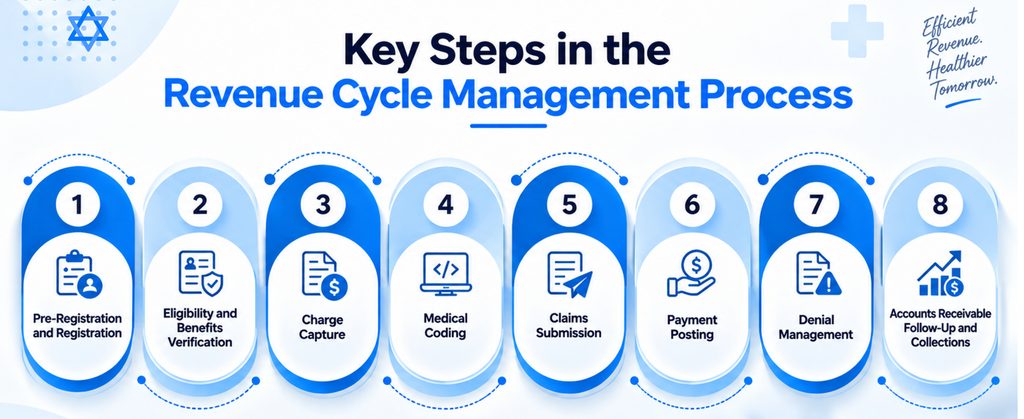
Revenue cycle management in healthcare is made up of several steps that happen before, during, and after a patient’s visit. Each one has a role to play, and an issue at one stage can create extra work later in the process.
1. Pre-Registration and Registration
The process usually starts before the appointment. The practice collects basic patient and insurance information, confirms the details during check-in, and completes any required forms or consent documents. Getting this information right at the beginning can save time when the claim is processed later.
2. Eligibility and Benefits Verification
Before providing care, staff check whether the patient’s insurance is active and review the relevant coverage details. This may include the patient’s copay, deductible, coverage limits, or whether prior authorization is needed. Finding an issue before the visit is generally easier than dealing with it after a claim has been submitted.
3. Charge Capture
After the patient receives care, the services provided need to be recorded properly. Procedures, tests, treatments, and other billable services should match the clinical documentation. If something is missed or entered incorrectly, it can affect what the provider is able to bill.
4. Medical Coding
The information in the clinical record is converted into standardized medical codes, including ICD-10, CPT, and HCPCS codes where applicable. The codes need to accurately reflect the care that was documented. Errors or inconsistencies at this stage can lead to claim questions, rejections, or denials.
5. Claims Submission
Once the claim has been prepared, it is sent to the appropriate payer. This may be Medicare, Medicaid, or a commercial insurance company. Each payer can have its own requirements for claim details, documentation, coding, and filing deadlines, so the information needs to be submitted correctly.
6. Payment Posting
After the payer processes the claim, the payment and related adjustments are recorded in the patient’s Accounting Outsourcing Firm. The practice can then see what was paid, what was adjusted, and whether any balance remains. Differences between the expected and actual payment may need further review.
7. Denial Management
Some claims will not be paid as submitted. When a denial occurs, the reason needs to be reviewed before deciding what to do next. Depending on the issue, the claim may need to be corrected, resubmitted, or appealed. Keeping track of recurring denial reasons can also help a practice identify problems that are happening earlier in the Revenue cycle management in healthcare.
8. Accounts Receivable Follow-Up and Collections
Not every balance is resolved when the initial claim is processed. Outstanding amounts may still be due from an insurance payer or the patient. Regular follow-up helps the practice keep track of these balances, prioritize older accounts, and address issues before they remain unresolved for an extended period.
Front-End vs. Back-End Revenue Cycle
- Front-end RCM: Registration, eligibility verification, and patient financial information handled before or during the visit.
- Back-end RCM: Coding, claims, payment posting, denial follow-up, and collections handled after the visit.
Both sides are connected. A front-end mistake can create back-end billing problems, so RCM works best when the entire process is managed together. The same principle applies to financial processes outside RCM, which is one reason understanding how Outsourced Bookkeeping Works can be useful for growing healthcare organizations.
Common Revenue Cycle Challenges in Healthcare
Healthcare providers can face a range of revenue cycle issues, especially as billing requirements and administrative workloads increase. Some of the more common ones include:
- Rising claim denials and repeated rework
- Keeping up with coding and payer requirement changes
- Limited staff time for billing and claim follow-up
- Delays in receiving reimbursements
- More patient balances requiring collection follow-up
- EHR, billing, and clearinghouse systems that do not work smoothly together
These issues can affect both staff workload and the time it takes to collect payment. Understanding where the problems are coming from is often the first step toward improving revenue cycle management in healthcare.
Is RCM the Same as Medical Billing?
Not exactly. Medical billing is one part of revenue cycle management in healthcare, mainly focused on submitting claims and collecting payments. RCM covers the wider process, including eligibility checks, coding, denial follow-up, accounts receivable, and reporting.
In other words, medical billing fits inside the revenue cycle, while RCM connects the different steps from the patient’s first visit through final payment.
When RCM Support Makes Sense
Managing RCM internally takes the right people, systems, and regular follow-up. As patient volume grows, keeping up with claims, coding, denials, and accounts receivable can become difficult for an in-house team. For organizations that also need help keeping their financial records organized, Outsourced Bookkeeping and Accounting Services can provide additional support.
This is where outside support can be useful. VBS Global provides Revenue Cycle Management Services for healthcare providers across the USA, covering patient access, insurance verification, coding support, claims management, denial follow-up, payment posting, and AR management.
If your practice is dealing with recurring denials, delayed reimbursements, or growing AR, reviewing the current process can help identify where things are getting stuck. You can also request a free RCM consultation to discuss your needs with the VBS Global team.
At VBS Global, we help healthcare providers manage key revenue cycle tasks, from insurance verification and claims management to denial follow-up and accounts receivable. Get Your Free RCM Consultation and let our team help you identify gaps in your current revenue cycle process and find the right support for your practice.
Frequently Asked Questions
What is the main purpose of revenue cycle management?
The main purpose of RCM is to help healthcare providers manage the financial side of patient care and receive payment accurately and on time. A well-managed process can also reduce avoidable billing errors, denials, and repeated administrative work.
What are the main stages of the healthcare revenue cycle?
The process generally starts with registration and eligibility verification, followed by charge capture, coding, and claims submission. After that come payment posting, denial management, and accounts receivable follow-up.
Is revenue cycle management only for hospitals?
No. RCM is relevant to any healthcare organization that bills for patient care. Hospitals, physician practices, clinics, medical groups, and specialty practices all manage some form of revenue cycle, although the size and complexity of the process can vary.
What happens when RCM isn’t managed well?
Problems can show up in several ways, including more claim denials, delayed reimbursements, growing accounts receivable, and staff spending extra time fixing billing issues or following up on unpaid balances.