
Running a nonprofit organization in the USA is meaningful work. But behind every program you deliver, every community you serve, and every grant you receive, there is a financial operation that needs to be managed with precision and care.
Nonprofit accounting is not just about keeping records. It is about maintaining trust with your donors, your board, your beneficiaries, and the government. One financial misstep can damage your organization’s reputation and put your tax-exempt status at risk.
The good news is that with the right practices in place, nonprofit accounting does not have to be overwhelming. In this guide, we will walk you through the best practices for nonprofit accounting in USA organizations, helping you stay organized, compliant, and financially healthy.
What is Nonprofit Accounting?
Nonprofit accounting is the process of recording, organizing, and reporting the financial activities of a nonprofit organization. It follows a specific set of principles designed to reflect how funds are received, restricted, and spent rather than focusing on profit generation like standard business accounting.
The key difference is accountability. Nonprofits are accountable to their donors, grantors, and the public, not just their owners or shareholders. This means financial transparency and accurate reporting are not optional; they are fundamental to how a nonprofit operates. That is why nonprofit bookkeeping services play such a critical role in keeping organizations financially healthy and compliant.
Why Nonprofit Accounting is Different from Regular Accounting
Nonprofit accounting operates under a different set of rules and priorities compared to for-profit businesses. Here is why:
Fund Accounting
Nonprofits use fund accounting, a system that tracks money based on its designated purpose. Restricted funds can only be used for specific programs or projects, while unrestricted funds can be used for general operations. Keeping these separate and accurate is essential.
No Profit Motive
Unlike businesses, nonprofits do not measure success by profit. Instead, they focus on how effectively they are using their resources to fulfill their mission, which requires a different approach to financial reporting. This is why not for profit accounting follows its own distinct standards and principles.
Grant and Donor Reporting
Nonprofits often receive funding from grants and donations that come with specific reporting requirements. Funders want to know exactly how their money was used, and proper accounting makes this possible.
IRS Tax-Exempt Status
Most nonprofits in the USA hold 501(c)(3) tax-exempt status. Maintaining this status requires strict financial compliance, including accurate reporting, proper documentation, and regular filings with the IRS.
Best Practices for Nonprofit Accounting in USA
Following established best practices is the most reliable way to keep your nonprofit’s finances accurate, transparent, and compliant.
Maintain Separate Bank Accounts
Never mix personal or business funds with your nonprofit’s finances. Keeping a dedicated bank account for your organization ensures clean records, simplifies reporting, and protects your legal and tax status.
Track Restricted and Unrestricted Funds
Always track restricted and unrestricted funds separately. Using restricted grant money for unapproved purposes, even accidentally, can result in serious consequences, including having to return the funds and damaging relationships with funders.
Follow Fund Accounting Principles
Top professional services firms recommend adopting proper fund accounting practices from day one by categorizing every transaction by its designated fund and maintaining accurate financial reports for complete financial transparency.
Prepare Regular Financial Reports
Do not wait until year’s end to review your finances. Prepare monthly or quarterly financial reports, including a statement of financial position, statement of activities, and cash flow statement. Regular reporting helps your board make informed decisions and keeps your organization financially healthy.
Stay Compliant With IRS Regulations
Nonprofits in the USA must file Form 990 annually with the IRS. This public document shows your organization’s income, expenses, and activities, and failing to file for three consecutive years results in automatic loss of tax-exempt status. Stay on top of deadlines and make sure your filing is accurate.
Conduct Regular Audits
Depending on your revenue level and funding sources, your nonprofit may be required to undergo an annual financial audit. Even if not required, regular internal reviews or independent audits build trust with donors and grantors and help catch errors before they become problems. Maintaining accurate financial records is also important for effective Revenue cycle management in healthcare.
Use Cloud-Based Accounting Software
Modern cloud-based tools make nonprofit accounting significantly more manageable. They allow real-time access to financial data, automate routine tasks, and make it easier to generate accurate reports for funders and board members.
Outsource Bookkeeping and Accounting
Many nonprofits, especially smaller organizations, do not have the internal capacity to manage complex accounting properly. Accounting for non profit organization requires specialist knowledge that most volunteers and general staff simply do not have. Outsourcing to a professional team gives you access to that expertise without the cost of hiring full-time staff.
IRS and Tax Compliance for Nonprofits in USA
Tax compliance: The area in nonprofit accounting, in the USA, that may be the most crucial and also the most misunderstood.
While nonprofits are exempt from federal income tax, they still have significant compliance obligations:
- Form 990 Filing:- Nonprofits must file Form 990, 990-EZ, or 990-N based on size. It ensures transparency, and late or incorrect filing may cause penalties and loss of donor trust.
- Unrelated Business Income Tax (UBIT):- Income earned from activities not related to the nonprofit’s main mission may be taxable. Proper reporting is important to stay compliant.
- Payroll Taxes:- Accounting Outsourcing Firm help tax-exempt organizations manage payroll taxes accurately and avoid fines or compliance issues.
- State Compliance:- In addition to federal rules, nonprofits must follow state-specific registration, reporting, and tax requirements. These rules vary by state.
Common Nonprofit Accounting Mistakes to Avoid
Over the years, we have seen the same financial mistakes come up repeatedly in nonprofit organizations. The most frequently encountered are listed below, with advice on how to circumvent them:
Commingling Funds
Mixing restricted and unrestricted funds is a serious accounting mistake. It can affect compliance and make accurate financial reporting difficult. Funds should always be kept separate.
Neglecting Reconciliation
Delaying bank reconciliation creates errors that become harder to fix over time. Monthly reconciliation is essential to maintain accurate and reliable records.
Ignoring Functional Expense Reporting
This report divides expenses by function (program, management, fundraising) and by nature (salaries, rent, utilities). It is required for Form 990 filers and is closely reviewed by donors and grant providers.
Poor Documentation
Every transaction should have proper records such as receipts, invoices, and agreements. Good documentation protects the organization during audits and funding reviews.
Not Having a Budget
Operating without an annual budget makes financial planning and performance tracking difficult. A structured budget aligned with goals is essential for strong nonprofit financial management.
Tools Used for Nonprofit Accounting in USA
The right tools make nonprofit accounting more efficient and accurate. Here are the platforms most widely used by US nonprofits:
QuickBooks Nonprofit
A specialized version of QuickBooks designed for nonprofits. It supports fund accounting, donor tracking, grant management, and Form 990 preparation, making it a popular choice for organizations of all sizes.
Xero
Xero Accounting is a cloud-based accounting platform that offers real-time financial visibility, bank reconciliation, reporting features, and seamless integration with donor management systems.
Aplos
Built specifically for nonprofits and churches, Aplos offers fund accounting, online giving, and budgeting in one system. It is ideal for smaller organizations seeking a purpose-built solution.
Zoho Books
A budget-friendly accounting tool that provides bookkeeping, invoicing, and expense tracking. It is suitable for nonprofits that need reliable financial management at an affordable cost.
Benefits of Following Nonprofit Accounting Best Practices
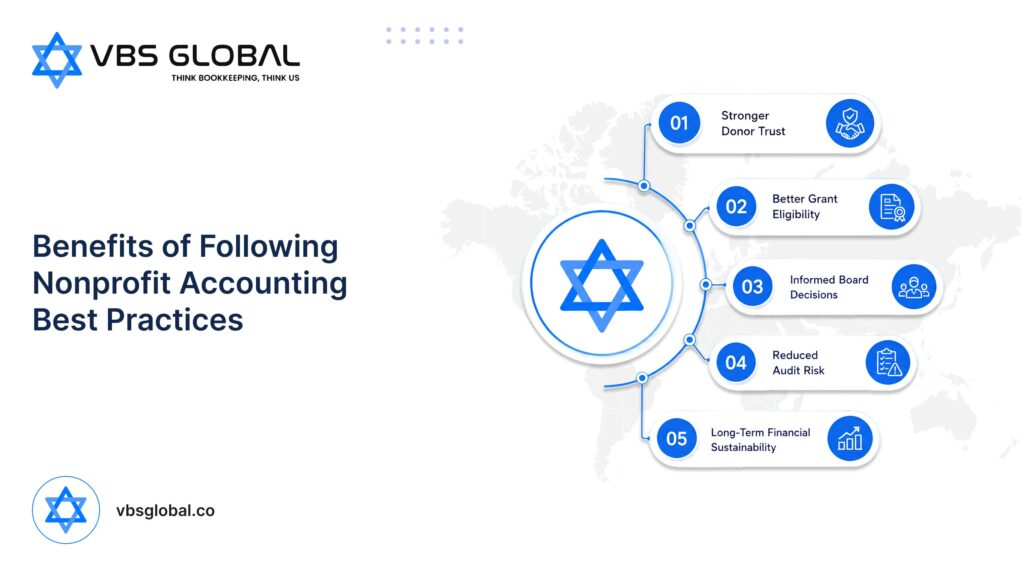
Getting your nonprofit accounting right delivers real benefits that go beyond just keeping the books clean:
- Stronger Donor Trust
Transparent, accurate financial reporting builds confidence with donors. When people can see exactly how their contributions are being used, they are more likely to give and to give again. - Better Grant Eligibility
Many foundations and government grant programs require detailed financial reports as part of the application process. Organizations with clean, well-organized books are far better positioned to secure funding. - Informed Board Decisions
Your board of directors relies on accurate financial data to make strategic decisions. Regular, reliable reporting keeps your board engaged, informed, and effective. - Reduced Audit Risk
Organizations that follow best practices and maintain accurate records are far less likely to face IRS scrutiny. And if an audit does occur, clean books make the process much less stressful. - Long-Term Financial Sustainability
Sound accounting practices help your nonprofit plan for the future, managing cash flow, building reserves, and making strategic investments in your programs and people.
How Outsourced Accounting Helps Nonprofits
Many nonprofit organizations, particularly smaller ones, simply do not have the internal resources to manage their accounting properly. Staff is stretched thin, volunteers handle financial tasks they are not trained for, and important obligations get missed.
Outsourced accounting solves this problem by giving nonprofits access to professional financial expertise at an affordable cost. Bookkeeping for nonprofit organizations typically includes:
- Day-to-day bookkeeping and transaction recording
- Fund accounting and restricted fund tracking
- Payroll processing for staff and contractors
- Financial report preparation for board meetings and funders
- IRS Form 990 preparation support
- Grant tracking and compliance reporting
- Year-round tax-ready record keeping
The result is cleaner books, better compliance, and more time for your team to focus on your mission, not your spreadsheets.
How to Choose the Right Nonprofit Accounting Partner
Not every accounting firm understands the specific needs of nonprofit organizations. Here is what to look for when choosing a partner:
- Nonprofit-Specific Experience: Choose a provider with experience in nonprofit accounting, including fund accounting, IRS compliance, and grant reporting. Understanding the sector is essential for accurate financial management.
- Full Range of Services: Look for a partner who offers bookkeeping, payroll, tax filing, and financial reporting in one place. This ensures consistency and improves efficiency.
- Cloud-Based Technology: The accounting firm should use modern cloud tools that provide real-time financial visibility and integrate with donor or program systems.
- Transparent Pricing: Select a provider with clear pricing and flexible plans that suit nonprofit budgets. Transparency helps avoid unexpected costs.
- Strong References: Ask for testimonials or case studies from other nonprofit clients. Proven success proves you can be counted on.
Why Nonprofits Choose VBS Global
At VBS Global, we understand that nonprofit organizations operate under a unique set of financial pressures, including tight budgets, strict compliance requirements, and the constant need to demonstrate accountability to donors and funders.
Our nonprofit accounting services are designed to give organizations the professional financial support they need without the overhead of a full-time hire. We also provide accounting services for CPA firms that support nonprofit clients, giving them the bookkeeping backbone they need to deliver excellent advisory work.
Here is what we offer:
- Fund accounting and restricted fund management
- Bookkeeping and financial record-keeping
- Payroll processing for staff and contractors
- IRS Form 990 preparation support
- Grant tracking and compliance reporting
- Financial report preparation for board meetings and funders
- Cloud-based accounting using QuickBooks, Xero, and Zoho Books
- Transparent, affordable pricing for nonprofit budgets
At VBS Global, we help nonprofit organizations across the USA stay financially organized, compliant, and mission-focused. Book a Free 30-Minute Consultation and let our nonprofit accounting experts take care of your finances today.
Conclusion
Nonprofit accounting is about more than keeping records. It is about earning and maintaining the trust of everyone who believes in your mission, your donors, your board, your beneficiaries, and the community you serve.
By following best practices for nonprofit accounting, your organization can stay compliant, make better decisions, and build the financial foundation needed for long-term impact.
Whether you manage your finances in-house or work with an outsourced partner, the commitment to accurate, transparent accounting is one of the most important investments your nonprofit can make.
FAQ
1. What accounting method should nonprofits use in the USA?
Most nonprofits in the USA use accrual accounting, which records income and expenses when they are earned or incurred, not when cash changes hands. This method provides a more accurate picture of financial health and is required for organizations that file Form 990.
2. Do nonprofits need to file taxes in the USA?
Yes. While most nonprofits are exempt from federal income tax, they must still file Form 990 annually with the IRS. Depending on their activities, they may also have payroll tax and unrelated business income tax obligations.
3. What is fund accounting, and why is it important for nonprofits?
Fund accounting is a system that tracks money based on its designated purpose, separating restricted funds from unrestricted ones. It is essential for nonprofits because it ensures that donor and grant money is used exactly as intended and reported accurately to funders.
4. How often should nonprofits review their financial statements?
At a minimum, nonprofits should review their financial statements monthly. More frequent reviews weekly for cash flow are recommended for organizations with tight budgets or high transaction volumes.
5. Can a small nonprofit benefit from outsourced accounting?
That is for sure. However, smaller nonprofits need these services the most since they are usually unable to provide an effective accounting department internally. Outsourcing gives them access to professional expertise at a cost that fits their budget.